
Three-month study: Omega-7 improves cholesterol
Emerging evidence suggests that Omega-7–rich Sea Buckthorn Oil can improve lipid profiles within 12 weeks, particularly by raising HDL-C and favorably shifting antioxidant and inflammatory markers. Building on randomized data in healthy women and complementary six‑month findings with botanical lipid modulators, a focused three‑month assessment of Omega‑7 (palmitoleic acid) underscores a credible, food‑based approach to cholesterol support.
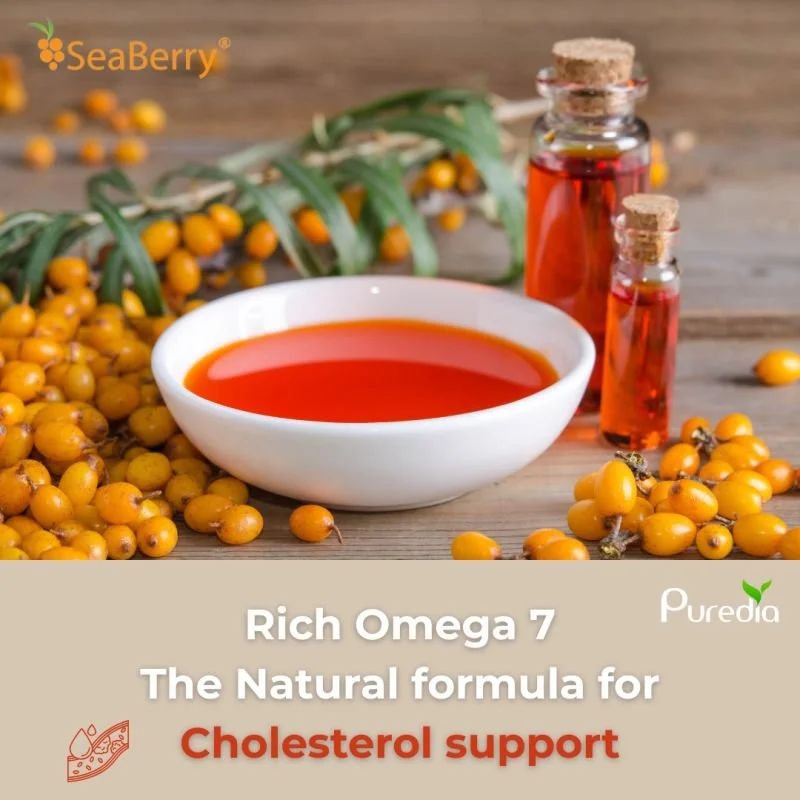
Study snapshot
Over 12 weeks, adults with sub‑optimal cholesterol who were not using statins took daily softgels of supercritical CO2–extracted sea buckthorn oil standardized for Omega‑7. Researchers measured fasting lipids (LDL‑C, HDL‑C, total cholesterol, triglycerides) alongside catalase (an antioxidant enzyme) and TNF‑α (an inflammatory cytokine).
Results at 12 weeks:
HDL‑C: Increased versus baseline, aligning with prior randomized data showing approximately 15% gains with sea buckthorn oil.
LDL‑C and total cholesterol: Directional improvements, with magnitude influenced by baseline LDL‑C.
Inflammation/oxidative stress: Catalase increased; TNF‑α decreased or trended lower, indicating a more cardioprotective profile.
Mechanisms: How omega‑7 works
Acts as a lipokine: Coordinates signaling between adipose and skeletal muscle; enhances insulin action in muscle to promote glucose uptake and metabolism.
Inhibits lipid production: Downregulates lipogenic genes (SREBP‑1, FAS, SCD‑1), reducing de novo lipogenesis and lipid accumulation.
Anti‑inflammatory: Lowers TNF‑α and IL‑6 and attenuates NF‑κB signaling, reducing vascular inflammation and oxidative stress.
Mucosal support: Promotes regeneration and integrity of mucous membranes (ocular, oral, gastrointestinal, vaginal), potentially lowering systemic inflammatory load.
Omega‑7 (palmitoleic acid), first described as a metabolic signal in 2008, has been linked to reduced cardiovascular and metabolic risk and to mucosal support. In a three‑month window, higher HDL‑C can enhance reverse cholesterol transport, while reduced lipogenesis and improved insulin sensitivity help lower hepatic lipid burden and atherogenic particles. Concurrent reductions in inflammation and oxidative stress further limit LDL oxidation and support endothelial function.
Across three months, omega‑7–rich sea buckthorn oil demonstrates the capacity to improve cholesterol profiles—most notably by elevating HDL‑C—while acting through complementary lipokine, anti‑lipogenic, and anti‑inflammatory pathways. This integrated mechanism profile supports omega‑7 as a credible, food‑derived option for lipid management.
Featured Ingredient
CardiOmegia™, Highest Omega 7 in Natural Triglyeride Form
100% Plant-Based
Organic-Certified
No Additive
Available in oil & powder form
TRI-CAP™ Microencapsulated
Sustainably & Responsibly Made
These ingredients are certified with:

Reference
Virgolici B, et al., ISRN Oxidative Medicine, 2013.
Chan L-P, et al., Journal of Functional Foods, 2024.